
Safety Tips for Older Cyclists on Shared Paths
Essential guidance for riding confidently and securely on Cork's shared cycling routes

Why Safety Matters on Shared Routes
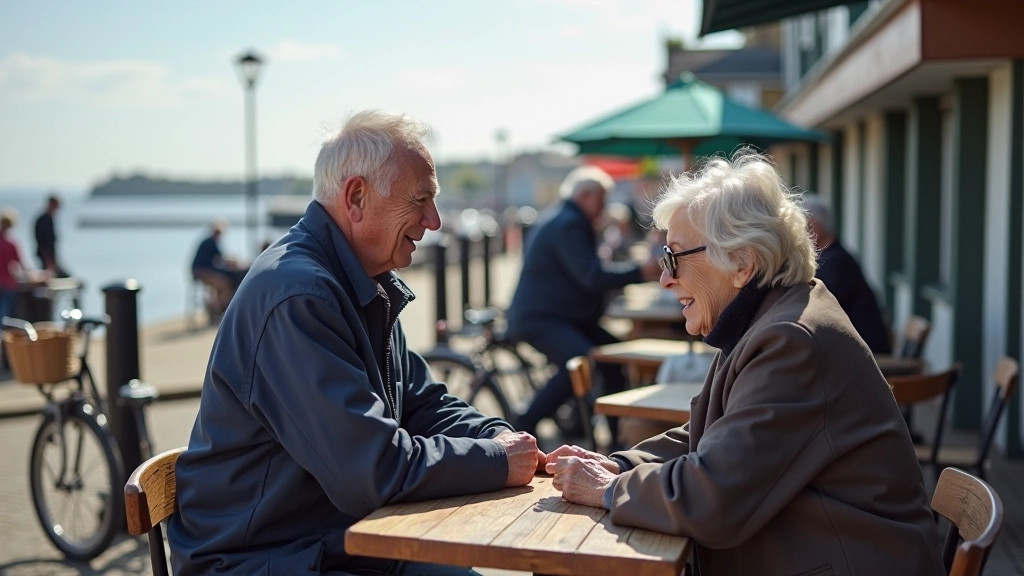
Cycling on shared paths — those spaces where pedestrians, runners, and cyclists all coexist — brings real rewards. You're out in the fresh air, getting exercise, and enjoying Cork's stunning waterfront scenery. But it's also a different experience than cycling on dedicated bike lanes. There's more to watch for. More unpredictable movement around you.
We're not trying to scare you away from these routes. In fact, they're some of the best places to ride if you know what you're doing. The Cobh Promenade and paths around Spike Island see plenty of mature cyclists every week. The key isn't to avoid shared paths — it's to ride them smart. That means understanding what hazards actually exist, knowing how other path users behave, and having the skills to handle unexpected situations.
This guide covers the real safety challenges you'll face and practical solutions that work. Not scary theory. Not patronizing advice. Just straightforward techniques that experienced older cyclists use every time they ride.
The Biggest Safety Issues
- Unpredictable pedestrians stepping into your path
- Limited braking distance on congested routes
- Visibility challenges at peak times
- Surface hazards (loose gravel, water drainage)
- Conflicts with other cyclists going different speeds
Be Seen Before You're Noticed
This is the foundation of shared-path safety. Most conflicts happen because someone simply didn't see another person. You can't control whether a pedestrian looks before stepping into the path. But you can make yourself incredibly hard to miss.
Start with lights — and not just little ones. A front light that's bright enough to see in daylight does two things. It catches eyes moving toward you, and it illuminates hazards on the path itself. A rear light (flashing is more noticeable than steady) makes you visible from behind. You'll want something with at least 50 lumens for daytime riding. On overcast days or in the late afternoon, these make a genuine difference.
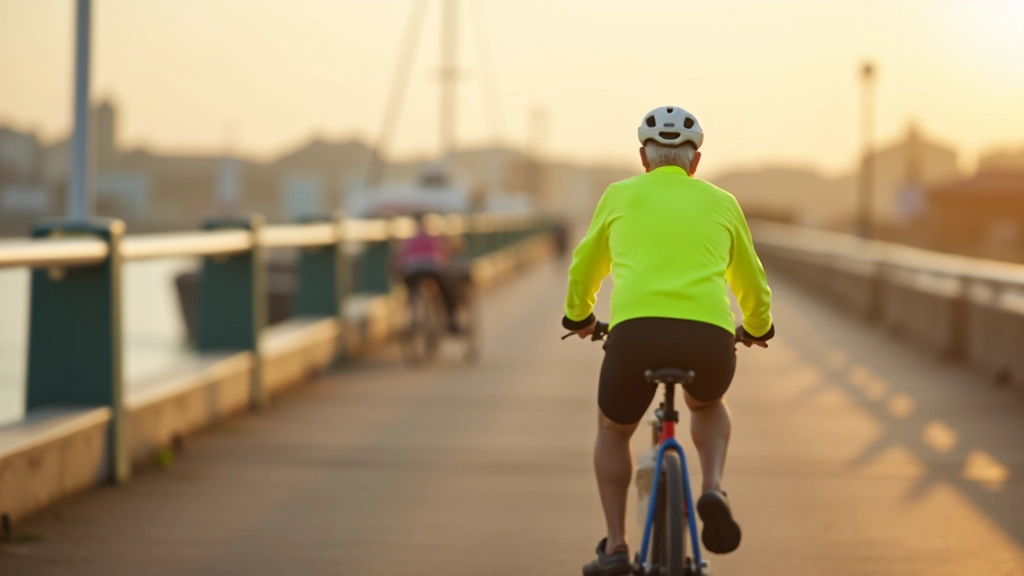
Then there's color. Bright clothing isn't just for racing cyclists. A high-visibility vest or jacket that you throw on for path riding gets noticed faster than a dark jacket. You don't need to look like a construction worker — there are attractive options in neon yellow, bright orange, or reflective silver. Pair this with reflective ankle bands or calf bands. When you're pedaling, that motion catches attention even better than a static vest.
Helmet color matters too. White, yellow, and bright orange helmets stand out. Dark helmets blend into trees and shadows. If you're upgrading your helmet anyway, this is worth considering.
Master Your Brakes Before You Need Them
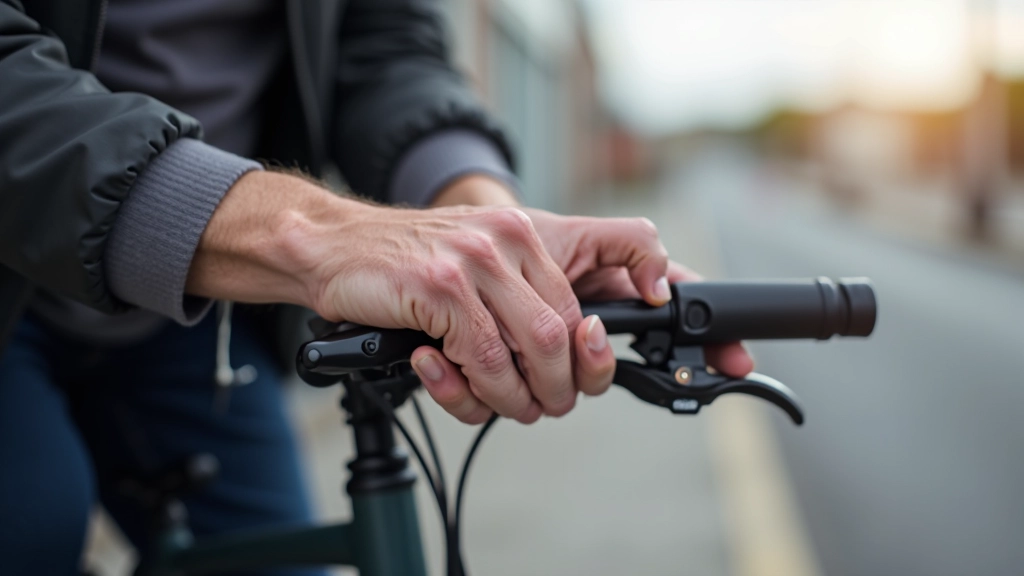
Here's something most people don't think about until it's too late. When you need to brake hard — like when a pedestrian suddenly steps into your path — your brain goes into automatic mode. You don't have time to think about technique. Your hands just do what they've practiced a thousand times. This is why brake control matters so much on shared paths.
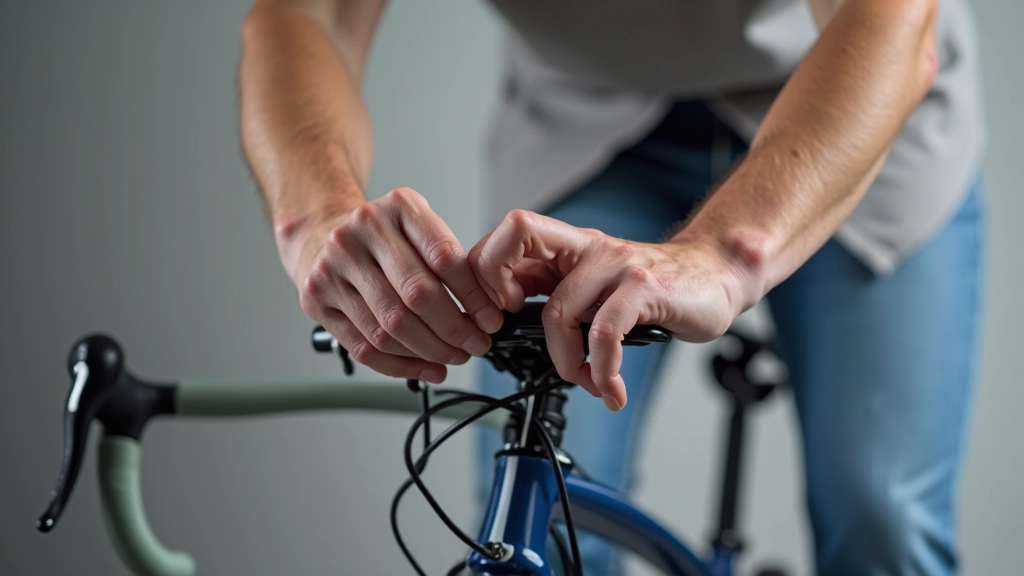
First, know your brakes. If your bike has rim brakes, practice gentle braking until you understand exactly how much lever pressure equals how much stopping power. Disc brakes are more forgiving — they don't lose power in the rain and they're easier to modulate. If you're thinking about a new bike, disc brakes are worth the upgrade for shared-path riding.
Second, practice emergency stops in an empty parking lot. Get comfortable bringing your bike to a complete stop in under 15 feet from a casual riding speed. You don't need to skid or slide. You just need to stop quickly without losing control. Most older cyclists can do this fine once they've practiced it a few times. The confidence alone changes how you ride on crowded paths.
Third, keep your brakes maintained. Worn brake pads are a real hazard. If your brakes feel spongy or don't grip as hard as they used to, get them serviced before riding shared paths.
Informational Purpose
This article provides educational information about cycling safety practices. It's not a substitute for professional instruction, personal coaching, or medical advice. Every cyclist's abilities and circumstances are different. Always ride within your own skill level and comfort zone. If you have physical limitations or concerns about balance and coordination, consider working with an experienced cycling instructor or your healthcare provider before attempting new routes or techniques.
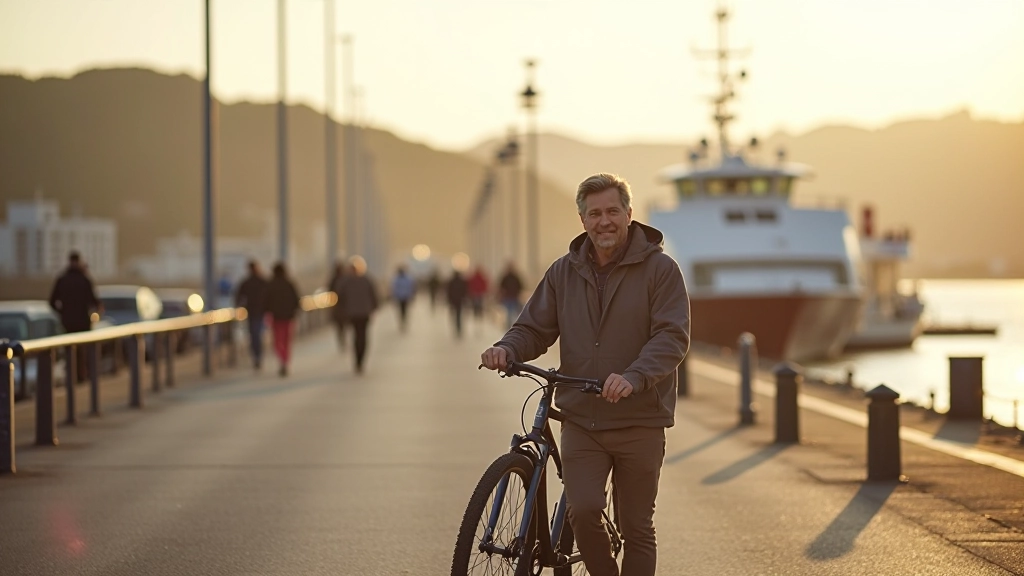
Position Yourself for Best Awareness
Where you ride on the path makes a real difference. It's not just about safety — it's about staying relaxed and confident because you're not constantly worried about what's happening around you.
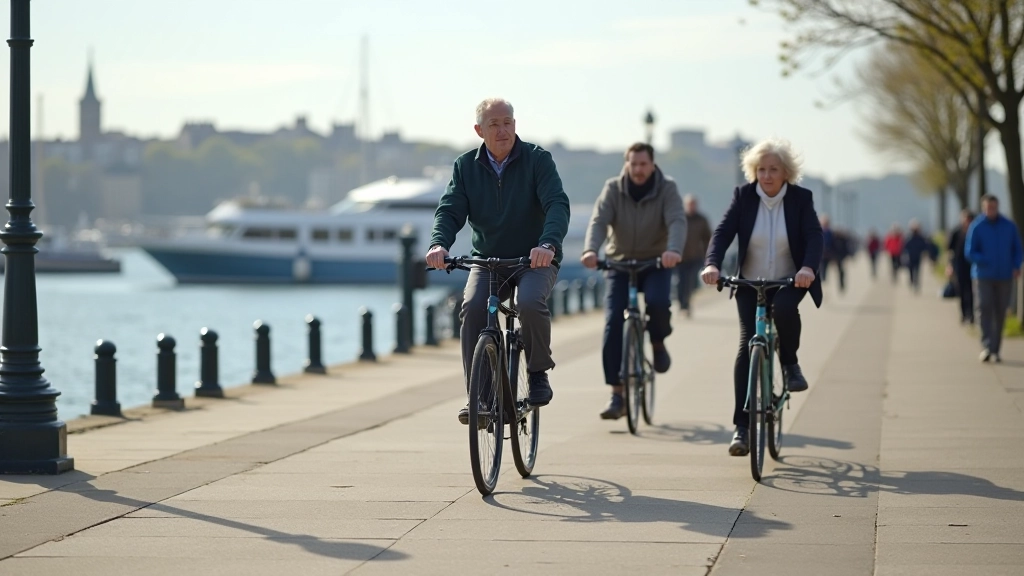
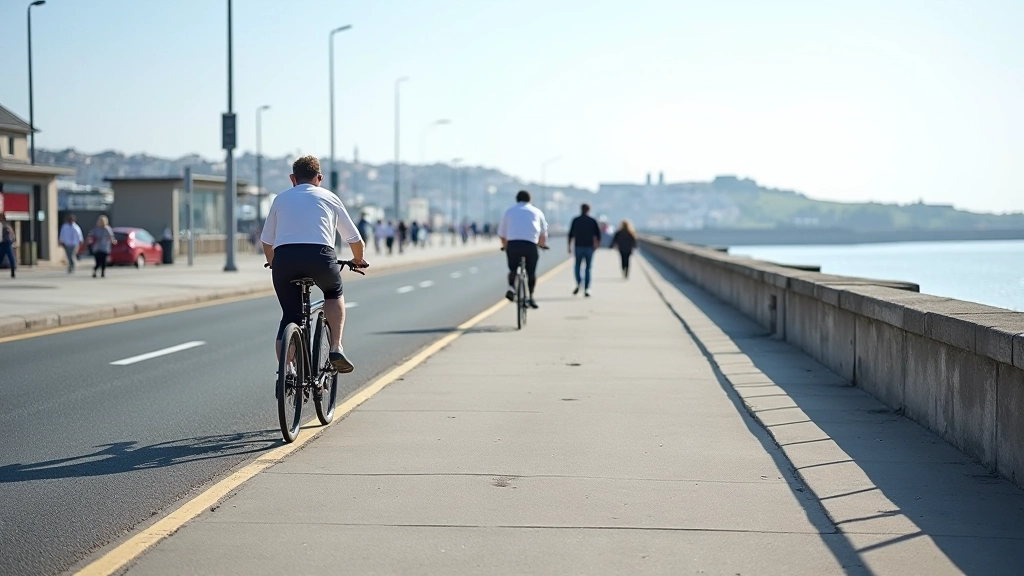
On wider shared paths, you've got room to choose your line. Ride toward the center-left rather than hugging the edge. This gives you more visibility of pedestrians coming from ahead and space to move if someone steps into your path. It also makes you more visible to people walking in both directions. You're not hiding in a corner where someone might miss you.
At peak times — weekends, school pickup hours, sunny afternoons — stay even further left of center. You're essentially creating a safety buffer between yourself and the busier side of the path. On quieter times or less crowded routes, you can ride more centrally.
Watch for patterns in how pedestrians move. On the Cobh Promenade, you'll notice dog walkers tend to wander side to side, people on phones don't look up, and families with kids are unpredictable. Runners are usually pretty predictable — they stay on a line. Once you understand these patterns, you can anticipate problems before they happen. That's the real safety skill.
Speed Control: The Often-Missed Skill
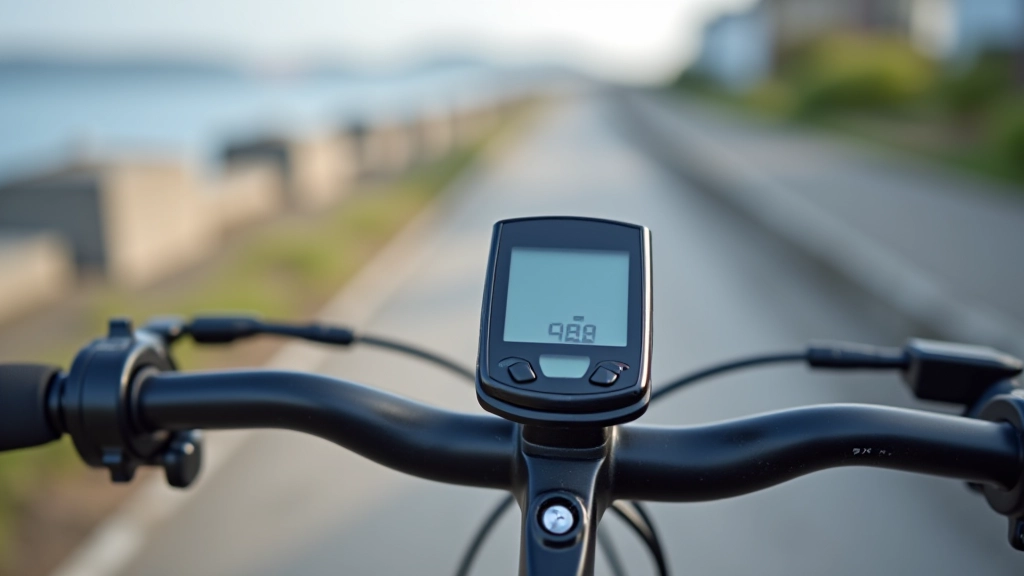
Here's what most cycling safety advice gets wrong. It tells you to "slow down" on shared paths without explaining what speed actually matters. The truth is more specific. You want to ride at a speed where you can stop safely if a pedestrian steps into your path unexpectedly. That's roughly 10-14 mph for most older cyclists on a shared path with moderate foot traffic.
This doesn't mean plodding along. You're still moving nicely, still getting a decent workout, still making real progress. But you're riding at a speed where your reflexes and your bike's brakes can actually handle surprises.
The trick is building this speed control into muscle memory. Don't think about it consciously — that's exhausting. Instead, practice rides where you focus on maintaining steady 12 mph on flat terrain, letting gravity slow you on hills, and using gentle braking to keep speed under control on descents. After a few rides, this becomes automatic. You'll find yourself naturally riding at the right speed without having to think about it.
If your bike doesn't have a speedometer, you can estimate pretty well. You're moving fast enough that conversation is a bit breathless but you can still speak in short sentences. You're not sprinting. You're not leisurely. You're in that middle zone where you're in control.
Ride with Confidence on Shared Paths
Safe cycling on shared paths isn't about being fearful or overly cautious. It's the opposite, actually. When you've practiced good braking technique, when you know how to position yourself for best visibility, when you're riding at a speed you can actually control — that's when you relax. You stop white-knuckling the handlebars. You stop tensing up every time you see a pedestrian. You actually enjoy the ride.
The routes around Cobh and Spike Island are genuinely beautiful places to ride. Shared paths or not, they're worth exploring. And now you've got the techniques to do it safely. You're not avoiding these routes because they seem risky. You're riding them with skills that make you genuinely safe.
Start with one of the easier routes — the Cobh Promenade is perfect for practicing these techniques in a relatively calm environment. Apply what you've learned here. Feel how your brakes respond. Notice where pedestrians actually move. Get a sense of the speed that feels right. Then you can confidently expand to busier times and more complex paths.
The goal isn't to become an expert rider overnight. It's to build your skills and confidence one ride at a time. That's how you go from worrying about safety to genuinely enjoying what shared paths have to offer.